How to Avoid Fake Reviews on Amazon and E-Commerce Outlets
Online reviews have become one of the most important factors in modern shopping. Before buying a smartphone, kitchen appliance, skincare product, piece of furniture, or even a simple household item, many shoppers check customer ratings and reviews first. A product with thousands of positive reviews can look like a safe choice, while an item with repeated complaints may quickly be removed from the shopping list.
However, not every online review is genuine. Fake, misleading, incentivized, and manipulated reviews can appear on Amazon and other e-commerce marketplaces. Some may be created to make a poor product look excellent, while others may be posted to unfairly damage competitors.
The good news is that shoppers can learn how to identify suspicious reviews before spending their money. The Federal Trade Commission (FTC) recommends looking beyond star ratings, checking multiple sources, considering reviewer history, and watching for unusual patterns in reviews.
What Are Fake Reviews?
A fake review is a review that does not honestly represent a real customer's experience with a product or seller. It may be written by someone who never purchased or used the product, generated or manipulated for promotional purposes, or posted in exchange for an improper incentive.
Fake reviews are not always positive. A dishonest seller may create fake five-star reviews to increase sales, while a competitor might post fake negative reviews to hurt another business.
The FTC's Consumer Reviews and Testimonials Rule, which became effective on October 21, 2024, prohibits several deceptive review practices, including creating, buying, or selling certain fake reviews and providing incentives conditioned on a particular positive or negative sentiment.
For consumers, the key lesson is simple: don't assume that a large number of reviews automatically means a product is trustworthy.
1. Don't Rely Only on the Star Rating
One of the easiest mistakes shoppers make is looking at the overall rating and immediately making a purchase.
A product with a 4.8-star rating may look excellent, but the average rating doesn't tell you everything. Some reviews could be misleading, outdated, irrelevant, or even associated with a different product.
Instead of asking, "Does this product have five stars?" ask:
- What are customers actually saying?
- Are recent buyers reporting the same problems?
- Do positive and negative reviews describe the same product?
- Are reviewers discussing specific features?
- Are there complaints about quality, shipping, sizing, or durability?
The FTC specifically advises consumers not to rely on star ratings alone because ratings and reviews can be fake or misleading.
2. Read Recent Reviews First
Products can change over time.
A product may have received excellent reviews two years ago but have a different manufacturer, seller, design, or quality today. That's why recent customer reviews can be more useful than older ones.
Look at reviews from the past few weeks or months and compare them with older feedback.
Pay attention to sudden changes such as:
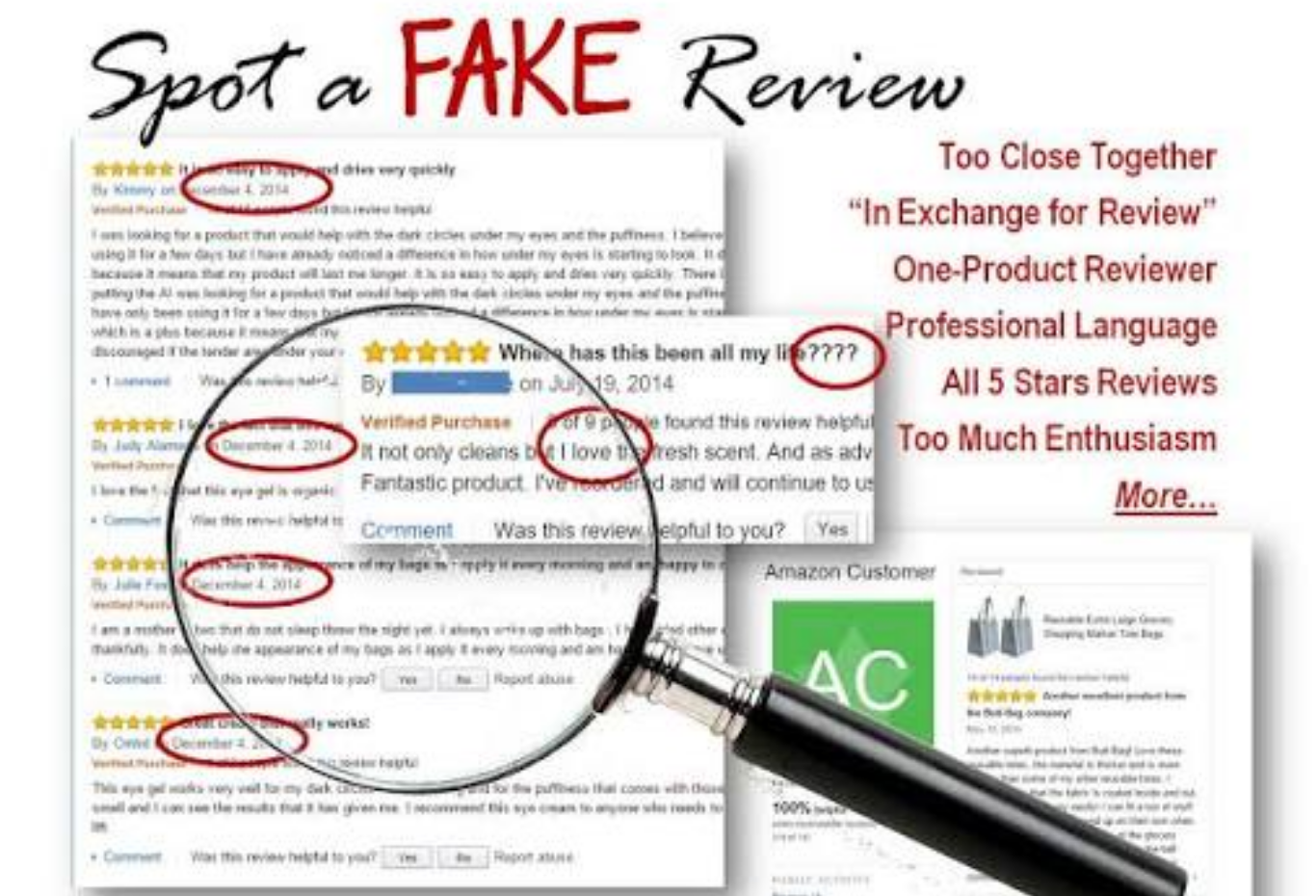
- A large number of reviews appearing within a short period
- A sudden increase in five-star ratings
- Many customers complaining about a recent quality change
- Reviews suddenly mentioning a different product
- Repeated comments about shipping or seller problems
A sudden burst of reviews isn't proof that reviews are fake, but it can be a reason to investigate further. The FTC also recommends watching for unusual bursts of reviews over a short period.
3. Look for Detailed, Specific Reviews
Genuine customers often describe their actual experience.
For example, instead of simply saying "Great product!" a useful review might explain how long the product was used, what worked well, what didn't, and whether it matched the product description.
Be cautious when you see hundreds of reviews containing almost identical phrases such as:
- "Amazing product!"
- "Best product ever!"
- "Highly recommended!"
- "Excellent quality!"
- "Perfect purchase!"
A short review isn't automatically fake. Real customers can leave brief feedback. However, large numbers of vague and repetitive reviews deserve additional attention.
Specific details generally give you more useful information than generic praise.
4. Check the Reviewer’s History
When a marketplace allows you to view information about a reviewer, take a closer look.
Ask yourself:
- Does the reviewer have a history of reviewing many unrelated products?
- Are their reviews extremely similar?
- Did they review several products within a very short period?
- Do they provide useful details?
- Does their review appear relevant to the specific product?
The FTC recommends considering who wrote the review and the reviewer's history, rather than looking only at the rating.
You don't need to investigate every reviewer. The goal is simply to identify obvious patterns that make a review less trustworthy.
5. Compare Positive and Negative Reviews
Don't read only the five-star reviews.
Negative and lower-rated reviews can reveal problems that aren't obvious from the product description. At the same time, one negative review shouldn't automatically convince you that the product is bad.
Instead, look for patterns.
For example, suppose 20 customers complain that a pair of shoes runs smaller than expected. That may be meaningful.
But if one customer says, "I didn't like the color," while hundreds of others report good quality, the complaint may be less important to your decision.
A useful strategy is to compare:
5-star reviews + 4-star reviews + 3-star reviews + 1-star reviews
This gives you a more balanced picture of the product.
6. Watch for Reviews That Don't Match the Product
One suspicious pattern is a review that appears unrelated to the item you're researching.
For example, imagine you're looking at a kitchen blender and discover a review discussing battery life, screen brightness, or shoe sizing. That could indicate that reviews have been incorrectly combined, transferred, or manipulated.
Review "hijacking" is another concern in the broader review ecosystem, where reviews associated with one product can be made to appear relevant to another substantially different product. The FTC has addressed this type of deceptive practice in its review enforcement work.
If reviews seem unrelated to the product, don't ignore the warning sign.
7. Search Outside Amazon or the Marketplace
One of the best ways to verify an online product is to leave the marketplace and research it elsewhere.
Search for:
Product name + reviews
or:
Product name + complaints
You can also search for the model number, manufacturer, or brand name.
Look at independent review websites, consumer forums, expert reviews, videos, and other retailers. The FTC recommends checking reviews across multiple sources and searching for complaints about a company or product.
If customers across several independent sources report the same problem, that information may be more useful than hundreds of marketplace reviews.
8. Be Careful With Incentivized Reviews
Sometimes consumers receive discounts, free products, or other incentives in connection with reviews.
An incentive does not automatically mean the person's experience is false. However, it can introduce bias, particularly when compensation is tied to leaving a positive review.
The FTC's rules prohibit businesses from providing compensation or incentives conditioned on a review expressing a particular sentiment, whether positive or negative.
As a shopper, look for disclosures indicating whether the reviewer received a product, compensation, or another benefit.
9. Check Photos and Videos Carefully
Customer-uploaded photos and videos can provide valuable evidence because they may show what the product actually looks like.
Compare customer photos with the seller's official product images.
Look for:
- Actual product size
- Material quality
- Color differences
- Packaging
- Product labeling
- Fit and dimensions
- Signs of poor manufacturing
Visual evidence isn't perfect either, but it can help you determine whether the product matches the seller's claims.
10. Investigate the Seller, Not Just the Product
A highly rated product can still create problems if you're purchasing from an unreliable seller.
Check:
- Seller rating
- Number of completed sales
- Recent customer feedback
- Return policy
- Shipping information
- Warranty details
- Seller history
The FTC recommends checking individual sellers and reading comments from recent buyers when shopping through online marketplaces.
This is particularly important when several sellers offer what appears to be the same product.
11. Don't Assume "Verified" Means "Perfect"
Marketplace verification systems can be useful, but no label should replace your own judgment.
A verified purchase can indicate that a reviewer purchased the product through the platform, but it doesn't automatically mean the review is accurate, detailed, or unbiased.
Use verification labels as one piece of evidence, not the entire decision-making process.
12. Report Suspicious Reviews
If you find a review that appears fraudulent or violates the marketplace's policies, use the platform's reporting system.
For example, Amazon provides mechanisms for reporting review abuse. Amazon has stated that it does not allow reviews designed to mislead or manipulate customers.
Consumers in the United States can also report suspected deceptive review practices to the FTC through its fraud-reporting system.
Reporting suspicious activity can help marketplaces investigate problematic reviews and protect other shoppers.
A Simple Fake Review Checklist
Before buying an expensive product online, ask these questions:
✓ Are there detailed customer reviews?
✓ Have I checked recent reviews?
✓ Do the negative reviews reveal a consistent problem?
✓ Are there unusual bursts of reviews?
✓ Do reviewers appear to have realistic histories?
✓ Do customer photos match the seller's claims?
✓ Have I checked other websites?
✓ Have I researched the seller?
✓ Are there complaints about the product or company?
✓ Am I relying on more than the star rating?
If several warning signs appear at once, consider choosing another product.
Final Thoughts
Fake reviews can make online shopping confusing, but you don't need to become an expert investigator to avoid them. The most effective approach is to look for patterns instead of trusting a single rating or review.
Read recent reviews, compare positive and negative feedback, examine reviewer history, investigate unusual review patterns, check independent sources, and research the seller before purchasing. Most importantly, don't let an impressive five-star rating make the buying decision for you.
A few extra minutes of research can help you avoid disappointing purchases and identify products that genuinely deliver what they promise. As the FTC advises, consumers should read reviews critically, consider their sources, and use multiple sources when evaluating products and sellers.